
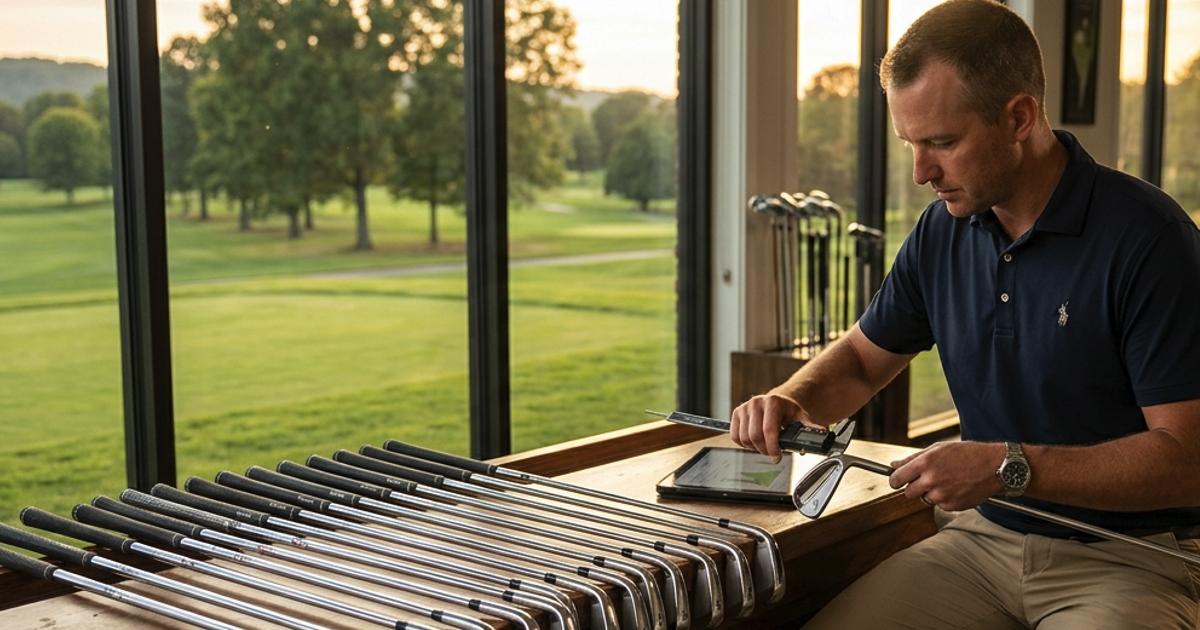

Walk into any golf shop and you will quickly realize that golf clubs come in a staggering variety of lengths, shaft flexes, grip sizes, lie angles, and loft configurations. For the uninitiated, it can feel overwhelming. But here is the truth that every serious golfer in Southwest Florida needs to hear: swinging a club that was not built for your body and your swing is one of the single biggest barriers to improvement on the course. Properly fitted golf clubs are not a luxury reserved for Tour professionals. They are a game-changing investment that golfers of every skill level deserve to make.
At Golf & Casual Shop in Fort Myers, we have been fitting golfers across Southwest Florida since 1971. We have seen firsthand how a set of clubs dialed in to match a player's unique physical attributes and swing characteristics can produce dramatic improvements in distance, accuracy, consistency, and confidence. In this post, we want to walk you through why proper club fitting matters so much and what to expect from the fitting process.
Why Off-the-Shelf Clubs Often Fall Short
When golf clubs are manufactured for mass retail, they are built to fit an imaginary average golfer. Standard length. Standard lie angle. Standard grip size. Standard shaft flex. The problem is that the average golfer does not actually exist. Real golfers come in every shape and size, with wildly different swing speeds, tempos, and physical tendencies. Buying a set of clubs straight off a rack without any consideration for your individual characteristics is a bit like buying reading glasses without knowing your prescription. You might get close, but you will never see as clearly as you could with the right pair.
Common Problems Caused by Ill-Fitting Clubs
- Clubs that are too long or too short force you into unnatural posture and swing paths, leading to inconsistency and poor contact.
- Incorrect lie angle causes the clubface to point left or right at impact even when your swing feels perfect, leading to chronic directional misses.
- Wrong shaft flex can rob you of distance and accuracy. A shaft that is too stiff for your swing speed reduces launch and feel. A shaft that is too flexible produces ballooning shots and loss of control.
- Grip size mismatch affects how your hands release through impact, influencing whether you tend to hit pulls, hooks, fades, or slices.
- Incorrect loft configuration can create gaps or overlaps in your distance chart, leaving you without the right club for certain yardages.
Many golfers spend years taking lessons and practicing endlessly, never realizing that the equipment they are working with is actively fighting against them. When a skilled club fitter identifies and corrects these variables, the results can feel almost immediate.
What a Proper Club Fitting Actually Involves
A thorough club fitting is a conversation as much as it is a technical assessment. At Golf & Casual Shop, our fitting process begins with getting to know you as a golfer. How long have you been playing? What are your typical misses? What are your goals? Do you walk the course or ride? These details matter enormously when building a set of clubs that serves your game.
Measuring the Physical Attributes That Matter
A quality fitting starts with measuring your height and wrist-to-floor distance to determine proper club length. This ensures that you can address the ball comfortably with good posture rather than hunching over or standing too upright. From there, a fitter will assess your grip size needs, which are influenced by hand size and finger length. Playing with grips that are too thin encourages an overly active hand release and can lead to hooks. Grips that are too thick restrict the hands and can cause pushes and fades.
Evaluating Your Swing Characteristics
The technical side of fitting involves assessing your swing speed, tempo, attack angle, and ball flight tendencies. Shaft flex is largely determined by swing speed, but tempo and transition also play important roles. A player with a smooth, languid tempo may perform better with a softer flex than their swing speed alone would suggest. A player with a quick, aggressive transition may need a stiffer profile to prevent the shaft from loading and unloading at the wrong moments.
Lie angle is evaluated by looking at how the club sits at impact. During a dynamic fitting, impact tape or a lie board is used to measure where the sole of the club makes contact, allowing adjustments to be made so the leading edge sits flush to the turf through the hitting zone. Even a few degrees of lie angle difference can shift ball flight several yards left or right on a long iron shot.
Building the Right Gapping Strategy
One of the most underappreciated aspects of club fitting is distance gapping. Your set should be configured so that each club produces a consistent, predictable yardage gap from the next. Typically, golfers aim for gaps of roughly ten to fifteen yards between each iron. If you have two clubs that go the same distance or a large gap where no club covers a critical yardage, you will frequently be stuck between clubs on approach shots. A good fitter will identify these gaps and work with you on the right loft structure to cover the course efficiently.
The Long-Term Value of Being Properly Fitted
Some golfers hesitate at the idea of custom fitted clubs because of the perceived cost. But consider this: off-the-shelf clubs that do not fit you correctly can cost you strokes on every hole of every round you ever play. The cumulative impact of fighting equipment that works against your natural motion is enormous. Properly fitted clubs, on the other hand, can accelerate your improvement, build your confidence, and make the game significantly more enjoyable.
Fitted Clubs Help You Learn Faster
When your equipment is properly matched to your swing, the feedback you receive on every shot becomes much more meaningful. If you make a good swing and hit a poor shot, you can trust that the error was in your motion and not in your equipment. This clarity of feedback is invaluable for improvement. Conversely, when your clubs are fighting your swing, you can never be sure whether a bad shot was your fault or the equipment's fault. Proper fitting removes that uncertainty.
Fitting Is Not Just for New Sets
Club fitting is not only relevant when you are purchasing a brand-new set. If you have experienced significant changes in your swing, your physical condition, or your game in general, it is worth getting your existing clubs re-evaluated. Lie angles can be adjusted. Grips can be replaced. Shafts can be swapped. In some cases, small adjustments to what you already own can make a substantial difference without requiring a full equipment investment.
At Golf & Casual Shop, we also specialize in custom club building. Whether you are starting from scratch or looking to modify and upgrade your current set, our knowledgeable staff can help you find the configuration that gives you the best possible chance of playing your best golf every time you step on the course.
Visit Golf & Casual Shop for Expert Club Fitting in Fort Myers
If you have never been properly fitted for golf clubs, there is no better time to start than right now. Whether you are a brand-new golfer or a seasoned player who has been fighting a persistent miss for years, a professional fitting could be the turning point you have been looking for. Our team at Golf & Casual Shop has been serving Southwest Florida golfers with expertise and passion for more than fifty years, and we take tremendous pride in helping every customer find the equipment that truly fits their game.
Stop by and see us at our Fort Myers location, Monday through Saturday from 9AM to 5:30PM and Sunday from 11AM to 4PM. You can also reach us by phone at (239) 936-8753. We look forward to helping you play better golf with equipment that was built for you and no one else.