
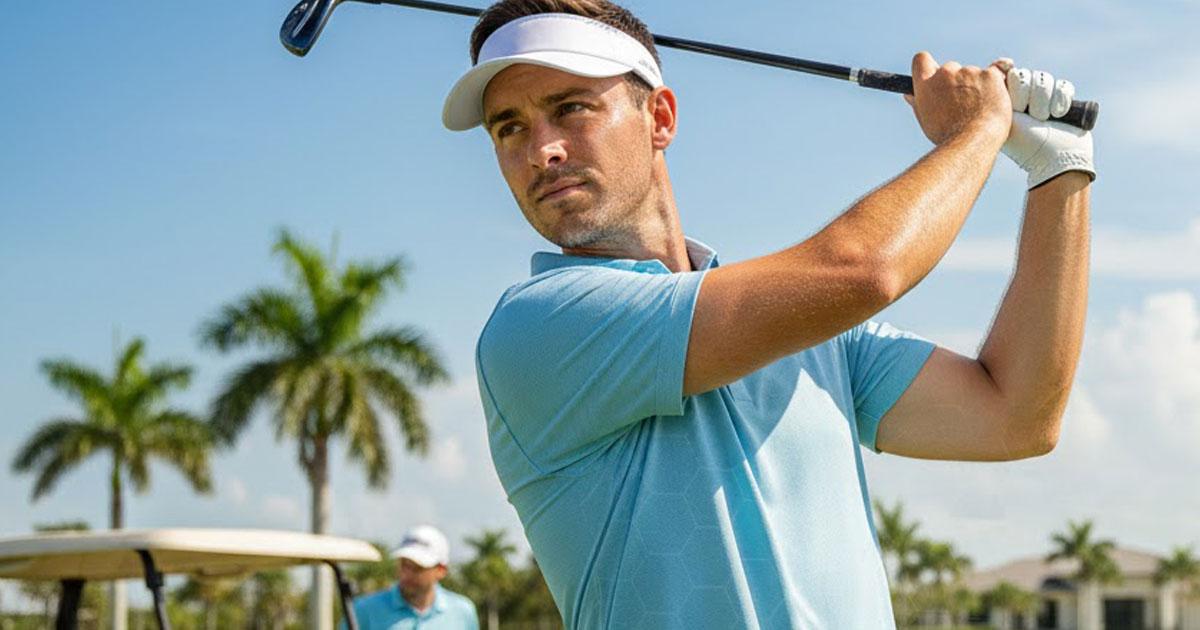

In most golf destinations, clothing choices are about style, brand preference, and personal taste—functional considerations that don't dramatically impact your round. In Southwest Florida, where humidity regularly exceeds 80%, temperatures climb into the 90s by mid-morning, and afternoon thunderstorms arrive with predictable regularity during summer months, what you wear isn't just about looking good in the clubhouse photo—it's about surviving 18 holes without heat exhaustion, maintaining focus despite sweat-drenched discomfort, and preserving your energy for that crucial back-nine push. At Golf & Casual Shop, we've spent years helping Southwest Florida golfers understand that performance apparel engineered for extreme heat and humidity isn't a luxury—it's essential equipment that impacts your game as significantly as the clubs in your bag, and choosing the wrong fabrics and fits can sabotage even the most talented player's performance before they reach the turn.
Understanding Southwest Florida's Unique Climate Challenge
Southwest Florida presents a perfect storm of conditions that make golf apparel selection more critical than in moderate climates where cotton polos and traditional golf wear perform adequately. Our humidity levels don't just make you sweat—they prevent that sweat from evaporating efficiently, which is your body's primary cooling mechanism. When air is already saturated with moisture, perspiration sits on your skin rather than evaporating and cooling you, creating a greenhouse effect inside your clothing. Temperatures that might feel manageable in dry Arizona heat become oppressive when combined with our moisture-laden air. Direct sun exposure on fairways without shade trees intensifies heat load on your body, with radiant heat from pavement and cart paths adding to the assault. Afternoon thunderstorms during summer months mean you might start your round in blazing sunshine and finish in a downpour, requiring versatile clothing that handles both conditions. The combination of these factors means that golfers wearing inappropriate fabrics experience significantly degraded performance, shortened rounds due to heat-related illness, and genuine safety concerns that shouldn't be part of recreational golf.
The Science of Moisture-Wicking Technology
Moisture-wicking fabrics have revolutionized golf apparel, but not all "performance" fabrics perform equally in Southwest Florida's extreme conditions. True moisture-wicking technology uses synthetic fibers engineered with hydrophobic (water-repelling) properties that pull moisture away from skin toward the fabric's outer surface where it can evaporate more easily. The fabric structure—often a tight weave of specially shaped fibers—creates capillary action that transports sweat outward through the material. Advanced moisture-wicking apparel features different zones with varying levels of wicking intensity—heavier wicking under arms and across the back where you sweat most, lighter wicking in other areas. The speed of moisture transport matters tremendously—premium fabrics move sweat to the surface within seconds, while budget "moisture-wicking" materials may take minutes, leaving you feeling damp and clammy. Evaporation rate depends on fabric surface area and air permeability—materials with larger surface area exposed to air dry faster than smooth, tightly-woven fabrics. In Southwest Florida's humidity, even the best wicking fabrics can't make sweat evaporate instantly, but they dramatically outperform cotton and traditional materials that absorb moisture and hold it against your skin, creating heavy, clingy, uncomfortable garments that never dry and contribute to heat stress.
Why Cotton Is Your Enemy on Florida Courses
Despite cotton's comfort and tradition in golf apparel, it represents one of the worst fabric choices for Southwest Florida conditions, yet golfers continue wearing cotton polos out of habit or brand loyalty without understanding the performance cost. Cotton absorbs moisture readily—up to 25 times its weight in water—and holds that moisture against your skin rather than wicking it away. Once saturated, cotton becomes heavy, clingy, and takes hours to dry in humid conditions, meaning you're essentially wearing a wet towel for most of your round. The weight of sweat-soaked cotton pulls fabric away from your body in unflattering ways that impact your swing mechanics and mental confidence. Wet cotton provides zero cooling benefit since the moisture isn't evaporating—you get all the discomfort of being drenched without any temperature regulation. Cotton also chafes more readily when wet, creating irritation under arms, along collar lines, and anywhere fabric rubs against skin during your swing. From a safety perspective, cotton's inability to dry contributes to heat-related illness by preventing your body's cooling system from functioning properly. The golf traditionalists who insist on cotton polos "because that's what real golfers wear" are sabotaging their own performance and comfort based on outdated thinking from an era before performance fabrics existed. In Southwest Florida's climate, cotton isn't classic—it's a liability.
Fit Matters: How Proper Sizing Affects Performance
Beyond fabric technology, the fit of your golf apparel dramatically impacts comfort and performance in extreme heat, yet many golfers wear sizes that work against them. Too-tight clothing restricts air circulation against your skin, trapping heat and preventing the minimal evaporative cooling our humidity allows. Compression fit has its place for athletic performance, but in extreme heat, moderate compression in strategic areas (core support) combined with looser fit in high-sweat zones (underarms, back) provides better temperature regulation. Too-loose clothing creates excess fabric that holds moisture, adds weight when wet, and can interfere with swing mechanics by catching on arms during backswing or twisting during follow-through. Modern athletic fits—slightly tailored through the body with strategic stretch panels—provide the best balance of professional appearance, unrestricted movement, and heat management. Sleeve length matters tremendously in sun protection versus ventilation trade-offs—short sleeves provide better cooling but less sun protection, while lightweight long-sleeve options with high UPF ratings actually keep you cooler by blocking direct sun exposure. Collar styles impact comfort during long rounds—traditional collars can chafe when wet, while modified collars or mock necks distribute moisture differently. The bottom line is that proper fit works with your fabric technology rather than against it, and many golfers would see immediate comfort improvement simply by getting professionally fitted for appropriate sizes in quality performance apparel.
UV Protection: The Hidden Performance Factor
Southwest Florida's intense sun exposure creates skin cancer risks that make UV-protective apparel a health necessity rather than optional feature, but UV protection also impacts game performance in ways golfers don't always recognize. Fabric with UPF (Ultraviolet Protection Factor) ratings of 30-50+ blocks harmful UV radiation, preventing sunburn that creates distraction, discomfort, and skin damage during long rounds. Preventing sunburn maintains focus and concentration throughout your round rather than dealing with increasing pain and irritation as burn develops. Long-sleeve options with high UPF ratings actually keep you cooler than short sleeves in intense sun by blocking radiant heat—counterintuitive but proven through extensive testing. Darker colors absorb more UV radiation than light colors but may feel hotter against your skin—the solution is dark colors with advanced cooling technology that handles the heat absorption. Hats with wide brims and neck protection provide crucial facial and neck coverage, areas where sun exposure is most intense and skin cancer risk highest. Modern UV-protective fabrics incorporate cooling technologies alongside sun blocking, providing both safety and comfort without choosing one over the other. The performance impact isn't just about preventing burn during today's round—it's about being able to play tomorrow without painful skin that makes gripping clubs or wearing collars uncomfortable. For serious golfers playing multiple rounds weekly in Southwest Florida, UV protection isn't vanity or paranoia—it's essential for maintaining long-term ability to enjoy the game comfortably and safely.
Cooling Technologies That Actually Work
Premium golf apparel incorporates multiple cooling technologies beyond basic moisture-wicking, creating measurable temperature reduction that impacts both comfort and performance. Ventilation zones using mesh panels or laser-cut perforations in high-heat areas (back, underarms, sides) increase airflow and accelerate moisture evaporation. Phase-change materials embedded in fabrics absorb heat as you warm up and release it as you cool down, creating temperature regulation that feels almost like built-in air conditioning. Reflective treatments on fabric surfaces bounce sun's radiant heat away before it penetrates to your skin, measurably reducing garment temperature. Antimicrobial treatments prevent odor-causing bacteria growth, keeping you fresher during long rounds and extending garment lifespan. Polygiene and similar permanent odor-control technologies remain effective through hundreds of washes unlike spray-on treatments that disappear after a few launderings. Some advanced fabrics incorporate jade or titanium particles that create cooling sensations on contact with skin—not just psychological comfort but actual temperature reduction. UV-reactive cooling activates specifically in sun exposure, providing extra cooling precisely when you need it most. These technologies aren't marketing gimmicks when properly implemented—they create measurable performance differences that impact your ability to maintain focus, energy, and swing consistency through all 18 holes in challenging conditions.
Color Choices and Heat Management
While personal style preferences matter, color selection in golf apparel has real performance implications in Southwest Florida's intense sun and heat. Light colors—white, light gray, pastels—reflect more solar radiation than dark colors, resulting in cooler fabric temperatures under direct sun exposure. However, light colors show sweat stains more readily, which may impact confidence and comfort even if they're keeping you cooler. Dark colors—navy, black, dark gray—absorb more heat but hide moisture and maintain professional appearance even when heavily sweating. Modern dark-colored performance fabrics incorporate enhanced cooling technologies to offset heat absorption, making dark colors viable when previously they would have been unbearable. Bright colors—electric blue, bright red, vivid green—often incorporate UV-reactive cooling and high-visibility properties that enhance both performance and safety. Pattern and print can disguise sweat stains while maintaining heat-reflective properties depending on base color and design. The key is understanding that color choice isn't just aesthetic—it's part of your heat management strategy, and the "right" choice depends on your priorities around cooling versus sweat visibility, personal style versus maximum performance. At Golf & Casual Shop, we help customers understand these trade-offs and select colors that match their specific needs and preferences while optimizing comfort in our challenging climate.
The Short Game: Choosing the Right Golf Shorts
Lower body apparel receives less attention than shirts, but shorts selection significantly impacts comfort and performance during Florida rounds. Fabric technology matters just as much in shorts as shirts—moisture-wicking, quick-dry materials prevent the heavy, clingy feeling of sweat-soaked shorts. Inseam length involves trade-offs between coverage and cooling—longer inseams provide more sun protection and traditional appearance, while shorter inseams maximize ventilation and cooling. Modern athletic cuts with slight taper provide professional appearance while eliminating excess fabric that adds weight when wet. Stretch fabrics in strategic areas (seat, thighs) ensure unrestricted movement during crouching for reads or full rotation during swings. Pocket placement and construction matter more than you'd think—poorly designed pockets create bulk, restrict movement, or dump contents during cart rides. Flat front designs with minimal hardware create cleaner lines and reduce potential pressure points during long sits in golf carts. Waistband construction with moisture-wicking or silicone grip prevents shirt untucking during swings while remaining comfortable during four-plus hours of wear. Belt loops should accommodate standard belt widths without excess gap that creates bunching. The hem should maintain shape and position without excessive flaring or riding up during walking. Quality golf shorts aren't just casual wear with a logo—they're engineered specifically for golf's unique movement demands combined with extreme weather performance.
Accessories That Complete Your Heat-Defense System
Beyond shirts and shorts, strategic accessory choices create comprehensive protection against Southwest Florida's challenging conditions. Performance socks with moisture-wicking, cushioning, and arch support prevent blisters, reduce foot fatigue, and maintain comfort through 18 holes of walking or standing. Golf gloves in lightweight, breathable materials maintain grip even when hands are sweating heavily—some golfers in extreme heat use two gloves rather than the traditional single glove. Hats with moisture-wicking sweatbands, ventilation eyelets, and UPF-rated fabrics protect your head and face while remaining comfortable even when soaked with sweat. Neck gaiters or cooling towels provide additional sun protection and cooling through evaporation when soaked with water. Sunglasses with polarized lenses reduce glare off water hazards and wet grass while protecting eyes from UV damage. Performance belts in moisture-resistant materials with non-slip backing keep shorts secure without deteriorating from constant sweat exposure. Undershirts in compression or loose-fit styles provide additional moisture management and reduce chafing—counterintuitively, adding this base layer often increases comfort in extreme heat. Rain suits in lightweight, packable materials handle sudden afternoon thunderstorms without adding significant weight to your bag. These accessories aren't afterthoughts—they're integral components of a complete system designed to keep you comfortable, safe, and performing well regardless of what Southwest Florida weather throws at you.
The Investment Perspective: Quality Versus Economy
Golf apparel spans enormous price ranges, creating questions about whether premium performance pieces justify costs over budget alternatives. Economy golf apparel often uses basic polyester with minimal moisture management—it's technically "performance fabric" but performs marginally better than cotton in extreme conditions. Mid-range options incorporate legitimate moisture-wicking and cooling technologies that provide real comfort improvements over economy choices. Premium brands combine multiple advanced technologies—superior wicking, enhanced cooling, odor control, UV protection—in fabrics that feel noticeably better and perform measurably better in extreme conditions. Construction quality matters tremendously for longevity—premium apparel maintains shape, color, and performance through hundreds of washes while economy pieces degrade quickly. The comfort difference between budget and premium becomes increasingly apparent over 18 holes in challenging conditions—subtle advantages in fabric technology compound into substantial performance gaps. For golfers playing occasionally in moderate conditions, mid-range performance apparel represents the sweet spot of value and performance. For serious golfers playing multiple rounds weekly in Southwest Florida's extreme climate, premium apparel is a genuine performance investment that pays dividends in comfort, safety, and maintained focus throughout rounds. The calculation isn't just initial cost but cost per round over garment lifespan—a $100 shirt worn 100 rounds costs $1 per round, while a $30 shirt that deteriorates after 20 rounds costs $1.50 per round with inferior performance throughout its short life.
Care and Maintenance for Maximum Performance
Even the highest-quality performance apparel requires proper care to maintain its technical properties and extend lifespan. Washing in cold water preserves fabric elasticity and prevents heat-related degradation of technical treatments. Using minimal detergent—preferably sport-specific detergent without fabric softeners—prevents residue buildup that clogs fabric pores and reduces wicking performance. Fabric softener is the enemy of performance apparel—it coats fibers with waxy residue that blocks moisture transport and reduces breathability. Air drying or low-heat tumble drying prevents heat damage to elastic fibers and technical treatments that break down at high temperatures. Turning garments inside out before washing reduces abrasion damage to outer surfaces and protects prints and logos. Washing performance apparel separately from cotton towels prevents lint transfer that clogs technical fabrics. Treating stubborn stains promptly with appropriate stain removers designed for synthetic fabrics prevents permanent discoloration. Storing clean, dry apparel in breathable garment bags or open closets prevents musty odors that develop in sealed plastic bags. Rotating multiple pieces rather than wearing favorites repeatedly allows fabrics to fully recover between uses, extending overall lifespan. Following these care protocols maintains performance properties through hundreds of washes—we see customers returning after years reporting their premium pieces still perform like new because they've cared for them properly.
Building Your Southwest Florida Golf Wardrobe
Creating a functional golf wardrobe for our climate requires strategic selection across multiple categories to handle year-round playing in varying conditions. Start with 5-7 performance polos in moisture-wicking fabrics—enough to wear different piece each playing day without immediate re-washing. Include 2-3 long-sleeve options for cooler winter mornings or extra sun protection during summer rounds. Add 3-4 pairs of performance shorts in neutral colors that mix-and-match with multiple shirts. Consider 1-2 pairs of lightweight pants for occasional cooler days or clubs with strict dress codes. Invest in 5-7 pairs of quality golf socks—critical foundation pieces often overlooked despite major impact on comfort. Own at least 2 quality hats that can rotate while the other is being washed. Include a lightweight rain jacket and rain pants for summer afternoon thunderstorms. Add a light pullover or vest for early morning winter rounds that warm up quickly. Build your wardrobe over time rather than all at once, learning what works best for your body, preferences, and typical playing conditions. Prioritize quality over quantity—better to have fewer high-performance pieces you actually enjoy wearing than closets full of economy apparel that performs poorly. Replace worn pieces proactively rather than waiting for complete failure—performance degradation is gradual and you may not realize how much better new pieces feel until you make the comparison. This strategic approach ensures you're always prepared for Southwest Florida's variable conditions without over-investing in apparel you rarely wear.
The Golf & Casual Shop Difference in Apparel Selection
At Golf & Casual Shop, we don't just stock golf apparel—we curate collections specifically for Southwest Florida's unique climate demands and help customers select pieces optimized for their needs. Our staff includes avid golfers who play in the same conditions you face and can provide honest, experienced guidance about what actually works versus marketing hype. We carry brands proven to perform in extreme heat and humidity, eliminating options that fail in our climate despite working adequately elsewhere. We maintain inventory across full size ranges in multiple cuts and styles, ensuring proper fit rather than forcing compromise. We provide honest feedback about appropriate investment levels for your playing frequency and performance needs—not everyone needs premium everything, but everyone deserves to understand the trade-offs they're making. We educate customers about care and maintenance to protect their investments and maximize lifespan. We stand behind what we sell with flexible return policies that allow you to actually test apparel on the course and return pieces that don't perform as expected. We understand that golf apparel isn't just fashion—it's functional equipment that directly impacts your enjoyment, performance, and safety during rounds in one of the country's most challenging golf climates. Whether you're a serious player seeking every competitive advantage or a recreational golfer simply wanting to enjoy 18 holes without suffering through heat and humidity, Golf & Casual Shop provides the expertise, selection, and service that transforms apparel from afterthought to performance advantage. Visit us today to discover how the right fabrics, fits, and features can transform your experience on Southwest Florida's beautiful but challenging courses—because the game is hard enough without fighting your clothing every step of the way.