
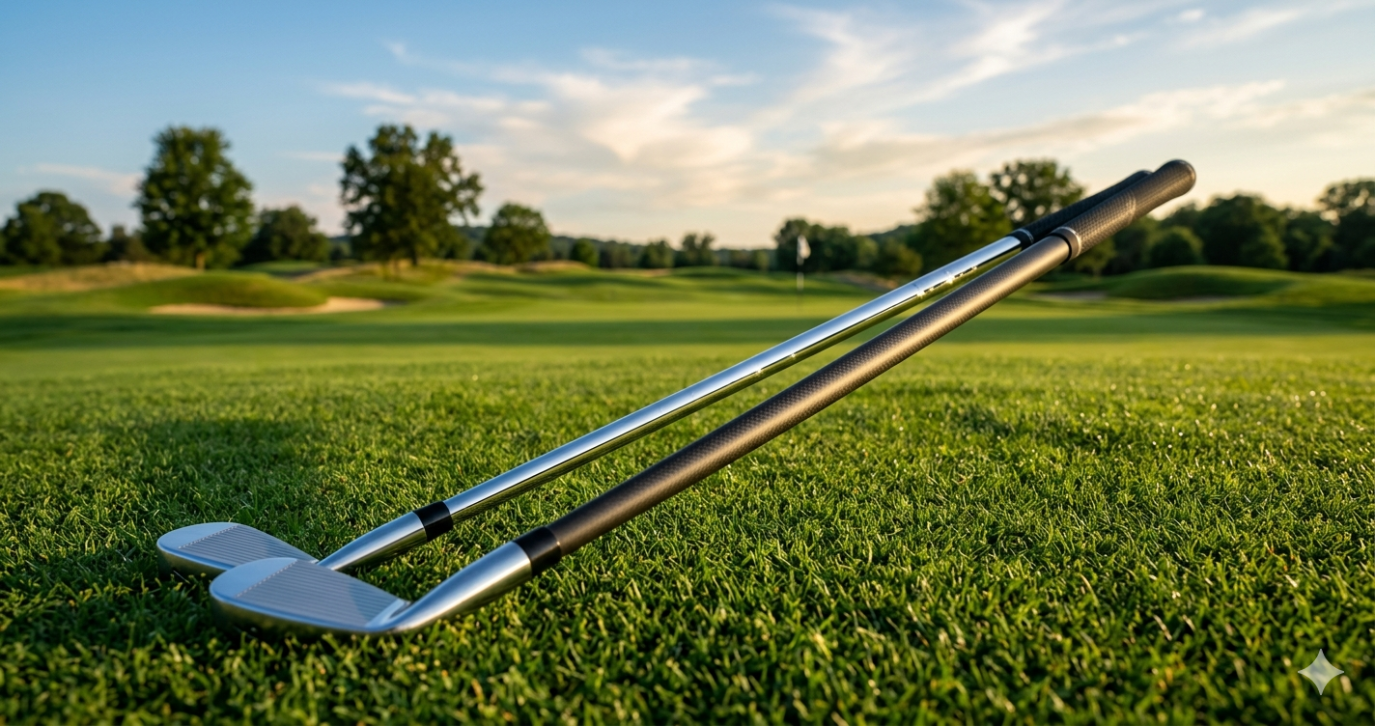

Walk into any golf shop and you will quickly discover that choosing a new set of clubs involves far more than picking a pretty head design. One of the most important decisions you will make — and one that directly affects your ball flight, distance, accuracy, and even the health of your joints — is whether to go with steel or graphite shafts. It is a question we hear constantly here at Golf & Casual Shop in Fort Myers, and for good reason. The right shaft can genuinely transform your golf game, while the wrong one can hold you back without you ever realizing why.
Whether you are a seasoned player who has been walking the fairways of Southwest Florida for decades or someone just getting serious about the game, understanding the difference between these two shaft materials is essential knowledge. Let us break it all down for you in plain language so you can make the best decision for your swing, your body, and your budget.
The Basics: What Makes Steel and Graphite Different?
At their core, steel and graphite shafts differ in material composition, weight, and the way they behave during the golf swing. These differences create a cascade of effects that influence how the club feels in your hands, how the ball launches off the face, and how consistently you can repeat your swing from hole to hole.
Steel Shafts
Steel shafts have been a staple of the golf industry for well over a century. They are made from carbon steel or stainless steel and are known for their durability, consistency, and relatively lower cost. A typical steel shaft in an iron weighs somewhere between 90 and 130 grams, making them noticeably heavier than their graphite counterparts.
The heavier weight of steel provides a feedback quality that many experienced players absolutely love. When you hit a shot slightly off center with steel shafts, you feel it immediately in your hands. That immediate feedback helps skilled golfers make real-time adjustments to their swing mechanics. Steel shafts also tend to have a lower torque rating, meaning they twist less during the swing, which promotes greater shot-to-shot consistency for players who generate enough clubhead speed to take advantage of that stability.
Graphite Shafts
Graphite shafts entered the mainstream golf market in the 1970s and have evolved dramatically since then. Made from carbon fiber composite material, graphite shafts are significantly lighter than steel, typically weighing between 50 and 85 grams in irons and even lighter in drivers and fairway woods. That reduced weight allows golfers to swing the club faster with the same effort, which translates directly into increased clubhead speed and, for most players, added distance.
Beyond distance, graphite shafts absorb vibration more effectively than steel. This damping effect is not just about comfort — though it certainly helps on those cold January mornings here in Southwest Florida — it also reduces stress on the hands, wrists, elbows, and shoulders over the course of a round. For golfers managing arthritis, tendinitis, or any other joint sensitivity, graphite shafts can make the difference between finishing 18 holes comfortably and walking off the course in pain after nine.
Who Should Play Steel Shafts?
Steel shafts remain the dominant choice among better players and touring professionals, particularly in irons and wedges. If you are a single-digit handicapper or scratch golfer who values precision and workability over raw distance, there is a strong case for steel in your bag.
The Consistency Advantage
One of the biggest arguments in favor of steel shafts is the consistency they deliver. Because steel is less flexible and has lower torque, the clubface returns to a more predictable position at impact from swing to swing. For players with a well-grooved, repeatable swing, that consistency adds up to tighter shot dispersion and better scoring.
Control and Shot Shaping
Players who intentionally shape their ball flight — working the ball left or right based on the demands of the hole — often prefer steel because the reduced twisting during the swing gives them more direct control over face angle at impact. When you want to carve a low drawing iron shot around a dogleg or hold a cut into a tucked pin, steel shafts respond more directly to your intentions.
Budget Considerations
It is worth noting that steel shafts are generally less expensive to manufacture and replace than graphite. If you are outfitting a full set of irons and cost is a meaningful factor, steel shafts offer excellent performance at a lower price point. Here at Golf & Casual Shop, we carry iron sets at a range of price points and can walk you through the options that make sense for your budget without sacrificing quality.
Who Should Play Graphite Shafts?
While steel has its loyal following, graphite shafts have become increasingly sophisticated and are now the right choice for a much broader range of golfers than many people realize. The old stereotype that graphite is only for beginners and seniors is simply outdated. Today's premium graphite shafts offer a level of performance that even tour-level players are embracing across more club categories.
Seniors and Golfers with Slower Swing Speeds
If your swing speed with a driver is below 85 miles per hour, graphite shafts in your irons will almost certainly help you hit the ball farther and higher. Generating enough clubhead speed to compress the ball properly and launch it at the optimal angle becomes harder as swing speed decreases, and the lighter weight of graphite gives your swing an extra gear you simply cannot get from heavier steel.
For senior golfers — and Southwest Florida has one of the most active senior golf communities in the entire country — graphite shafts are often a game-changer. The combination of added distance and reduced joint stress allows players to keep enjoying the sport they love for more years and more rounds.
Players Dealing with Joint Pain or Injury
Vibration from steel shafts accumulates over the course of a round. If you play two or three times per week, as many retired Southwest Florida residents do, that vibration adds up quickly. Graphite's vibration-dampening properties protect your joints round after round, which is not a luxury — it is a long-term investment in your ability to keep playing the game.
Woods, Hybrids, and Fairway Metals
Here is something important worth mentioning: even players who strongly prefer steel shafts in their irons almost universally use graphite in their drivers, fairway woods, and hybrids. The need for maximum clubhead speed and distance in the longer clubs makes graphite the clear choice at the top of the bag, and even the most tradition-minded golfer would agree with that.
Ladies Golf and Graphite Performance
For women golfers, graphite shafts are generally the standard recommendation across the full set. The lighter weight and increased flex options available in graphite shafts are ideally suited to help generate the clubhead speed needed for solid ball striking and satisfying distance. Our ladies apparel and equipment section at Golf & Casual Shop in Fort Myers includes a carefully selected range of clubs built specifically for female golfers, and graphite shafts feature prominently across those options.
Flex Matters Too: Don't Forget This Part of the Equation
When discussing shaft material, it is impossible to overlook shaft flex. Both steel and graphite shafts come in a range of flex profiles — typically labeled as Ladies, Senior, Regular, Stiff, and X-Stiff — and matching the right flex to your swing speed is just as important as choosing the right material.
- Ladies Flex: Designed for the slowest swing speeds, providing maximum help with launch and distance
- Senior Flex: Ideal for golfers with moderate to slower swing speeds who need extra assistance generating power
- Regular Flex: The most common choice for recreational golfers with average swing speeds
- Stiff Flex: Suited for players with faster swing speeds who need more control over their ball flight
- X-Stiff Flex: Reserved for high-speed swingers who generate significant power and need maximum stability
Playing the wrong flex in either steel or graphite can cause all kinds of shot problems. A shaft that is too stiff for your swing speed will cause you to lose distance and hit the ball low and to the right. A shaft that is too flexible will send shots ballooning high and left. Getting the flex right is not optional — it is fundamental. And the only truly reliable way to know which flex is right for you is through a professional fitting.
Why a Professional Fitting Makes All the Difference
Reading an article like this one is a great start, but there is no substitute for hands-on expertise when it comes to something as personal as your golf equipment. At Golf & Casual Shop, we have been helping golfers in Fort Myers and all of Southwest Florida find the right equipment since 1971. That is over five decades of knowledge, passion, and genuine care for the golfers who walk through our doors.
Our staff can assess your swing speed, tempo, and ball flight tendencies to point you toward the shaft material and flex profile that will actually help you play better golf. We carry a wide selection of custom golf clubs and can work with you to build a set that fits your game rather than forcing you to adjust your game to fit off-the-shelf equipment.
Whether you are leaning toward the traditional feel of steel or ready to experience the speed and comfort benefits of modern graphite, we want to help you make an informed decision that you will feel good about every time you pull a club from your bag. Stop by and see us at our Fort Myers location, Monday through Saturday from 9AM to 5:30PM or Sunday from 11AM to 4PM, or give us a call at (239) 936-8753. Your best golf is waiting for you.